
Intrigued by those adorable hamster eyes glancing at your carrot? Wondering if your furry friend can join the veggie party? Buckle up, because this guide delves into the exciting world of “Can Hamsters Eat Vegetables?”
Unraveling the mysteries of hamster nutrition, we’ll explore:
- The importance of a balanced diet for happy hamsters.
- A diverse landscape of safe and delicious vegetables.
- Essential tips for responsible feeding practices.
Get ready to navigate the exciting world of hamster veggies and unlock the secrets to a thriving, healthy life for your tiny companion!
Can Hamsters Eat Vegetables?
The answer, with a few important caveats, is yes! Vegetables can be valuable additions to a hamster’s diet, offering essential vitamins, fiber, and hydration. However, navigating the complex world of hamster nutrition requires understanding which veggies are safe, their potential downsides, and responsible feeding practices.
Hamsters, as omnivores, have evolved to enjoy a varied diet that includes both plant and animal matter. While commercial hamster food should be the foundation of their diet, offering safe vegetables in moderation can enrich their lives and provide valuable nutrients. But remember, not all vegetables are created equal. Some pack hidden dangers, requiring careful selection and portion control.
Now that the mystery of “Can Hamsters Eat Vegetables?” is solved, prepare to dive into the delectable world of safe veggie delights! In the next section, we’ll unveil a treasure chest of safe and delicious veggie delights your hamster will adore.
Safe Veggie Delights
Now that you know the exciting possibilities of veggies for your hamster, let’s explore some safe and delicious options:
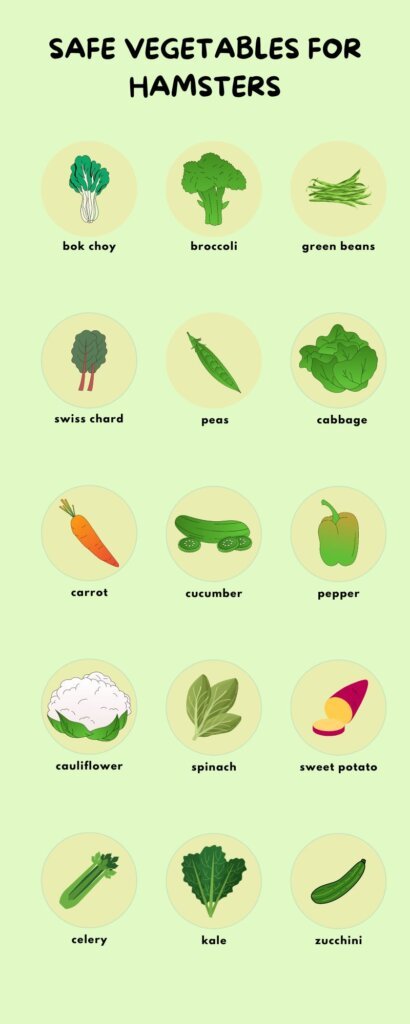
- Green Beans: Packed with fiber and low in sugar, these miniature green pods offer a satisfying crunch and promote healthy digestion. Remember to snap them into tiny pieces suitable for your hamster’s mouth.
- Cucumber: A refreshing and hydrating treat, cucumber slices provide essential water content, especially during hot summer months. Offer thin, seedless slices to avoid digestive upset.
- Bell Peppers: Bursting with vitamins and antioxidants, bell peppers come in an array of vibrant colors to entice your hamster’s taste buds. Chop them into tiny cubes, ensuring the seeds and core are removed.
- Carrot : A classic treat loved by many hamsters, carrots offer vitamin A and fiber. However, limit them due to their higher sugar content. Offer only the leafy tops or small, steamed pieces.
- Broccoli Florets: Rich in vitamin C and calcium, steamed broccoli florets provide a nutritious and enjoyable treat. Just remember to cut them into tiny, bite-sized pieces.
- Romaine Lettuce: This leafy green is low in sugar and provides essential vitamins. Tear it into small pieces to prevent choking.
- Kale: An excellent source of vitamins and minerals, kale should be offered sparingly due to its slightly higher calcium content. Tear it into tiny pieces.
- Basil: This fresh herb adds a delicate flavor and aroma to your hamster’s diet. Introduce it slowly and offer only a tiny amount, as strong flavors can be overwhelming.
- Mint: Offering a refreshing taste, mint should be introduced gradually and in very small quantities due to its strong flavor.
- Cilantro: With its unique aroma, cilantro can be an occasional treat in minimal amounts, ensuring your hamster enjoys its taste.
- Cabbagge: Brings benefits like fiber and vitamins! However, to keep their tummies happy, offer it cautiously.
Remember:
- Moderation is Key: Always offer vegetables in tiny pieces (pea-sized or smaller) and monitor your hamster’s reaction closely. Start with very small amounts and gradually increase if tolerated well.
- Variety is Spice of Life: Offer a rotation of different vegetables to keep your hamster’s diet interesting and ensure they receive a wider range of nutrients.
Next, we’ll explore vegetables to avoid and delve into responsible feasting practices to keep your hamster’s veggie experience happy and healthy. Ready to discover what’s off-limits and learn how to offer treats safely?
Vegetables to Avoid
While some veggies are safe and enriching for your hamster, others pose potential health risks. Let’s identify the vegetables that are absolutely off-limits:
- Avocado: Absolutely off-limits! This fruit contains persin, a toxin that can cause heart damage and respiratory failure in hamsters.
- Onion: This pungent vegetable contains harmful compounds that can damage your hamster’s red blood cells, leading to serious health issues.
- Garlic: Similar to onions, garlic contains harmful compounds that can harm your hamster’s red blood cells and should be avoided altogether.
- Raw Potato: Raw potatoes contain solanine, a toxin that can cause digestive upset and even neurological problems in hamsters.
- Seeds from Fruits (Apples, Cherries): Seeds from various fruits like apples and cherries can pose choking hazards or lead to digestive issues for your hamster. Avoid offering them.
- Citrus Fruits (Oranges, Lemons): Due to their high acidity, citrus fruits like oranges and lemons can cause digestive discomfort in hamsters. It’s best to keep them off the menu
Remember: If you’re unsure about a particular vegetable, avoid giving it to your hamster.
Next, we’ll explore some vegetables with sugar content requiring moderation, followed by crucial responsible feasting practices.
Responsible Feasting for Happy Hamsters
Now that you know the safe and forbidden veggie territory, let’s ensure your hamster enjoys their treats responsibly and happily:
- Introduce Slowly: Don’t overwhelm your hamster’s sensitive digestive system! Introduce new veggies gradually, starting with tiny amounts and observing their reaction for any signs of discomfort like bloating or diarrhea.
- Wash Thoroughly: Always wash all vegetables thoroughly under running water to remove any pesticides, bacteria, or dirt that could harm your hamster.
- Portion Control: Remember, moderation is key! Even safe veggies should be offered in small quantities appropriate for your hamster’s size and activity level. Overfeeding can lead to digestive problems and weight gain.
- Observe and Adapt: Pay close attention to your hamster’s preferences and adjust their veggie intake accordingly. If they seem disinterested in a particular veggie, try something else! Additionally, if they experience any discomfort after consuming a specific veggie, remove it from their diet.
Next, we’ll explore additional treats beyond the garden patch to enrich your hamster’s life and ensure they receive a well-rounded diet.
Beyond the Garden Patch: Additional Treats for a Balanced Life
We’ve explored the delightful world of safe vegetables and responsible feasting practices. But remember, a truly enriching hamster life extends beyond the veggie patch! Let’s discover other nutritious and engaging treats to keep your furry friend happy and healthy:
Protein Power-Ups (1-2 times per week)
- Mealworms: Offer dried or live mealworms in moderation for a protein-rich treat. Monitor closely, as they’re high in fat.
- Crickets: A rare treat due to their high protein and fat content. Offer only 1-2 tiny crickets per week, supervised.
- Hard-boiled Egg (White only): Mash a tiny bit of the cooked egg white for a rare protein and nutrient boost.
Crunchy Delights for Chewing Fun
- Untreated Wood Chew Toys: Choose safe, unflavored wood like apple, willow, or balsa for gnawing and teeth trimming.
- Pumice Stones: Offer small, untreated pumice stones for gnawing and mineral intake. Ensure they’re the right size for your hamster.
- Hay Cubes: Provide plain, unflavored hay cubes for chewing and digestive health. Avoid sugary or colorful cubes.
Fruits Treats
- Berries (Blueberries, Raspberries, Strawberries): Wash thoroughly, remove stems, and offer tiny pieces in moderation.
- Melon (Cantaloupe, Honeydew): Remove seeds and rind, offer tiny pieces occasionally.
- Grapes (Seedless only): Wash thoroughly, cut into tiny pieces, and offer sparingly.
Curious about exploring more safe and exciting treats for your hamster? Check out these helpful resources:
In the next section, we’ll wrap up this comprehensive guide, emphasizing the importance of a balanced diet and responsible care for your beloved hamster. Get ready to unlock the secrets to a thriving and joyful hamster life!
Conclusion: Thriving on a Balanced Diet and Responsible Care
Throughout this journey, we’ve explored the exciting world of hamster nutrition, venturing through the diverse landscape of safe vegetables, responsible feasting practices, and enriching treats. Remember, a balanced diet is the cornerstone of a happy and healthy hamster life.
Commercial hamster food should form the foundation of their diet, providing essential nutrients and fiber. Supplement this with safe vegetables and occasional treats like fruits, protein sources, and chew toys, ensuring variety and enrichment. However, always prioritize moderation and responsible feeding.
Remember:
- Consult your veterinarian for personalized dietary advice specific to your hamster’s breed, age, and health condition.
- Observe your hamster closely for any signs of discomfort after introducing new foods.
- Maintain a clean and hygienic environment with fresh water and a comfortable cage.
- Provide ample opportunities for exercise and playtime to keep your hamster mentally and physically stimulated.
By following these guidelines and embracing responsible care, you can unlock the recipe for a thriving and joyful hamster life. Remember, your tiny friend relies on you for their well-being, and every informed choice you make contributes to their happiness and health.
May your hamster adventures be filled with delicious discoveries, playful moments, and a lifetime of love!